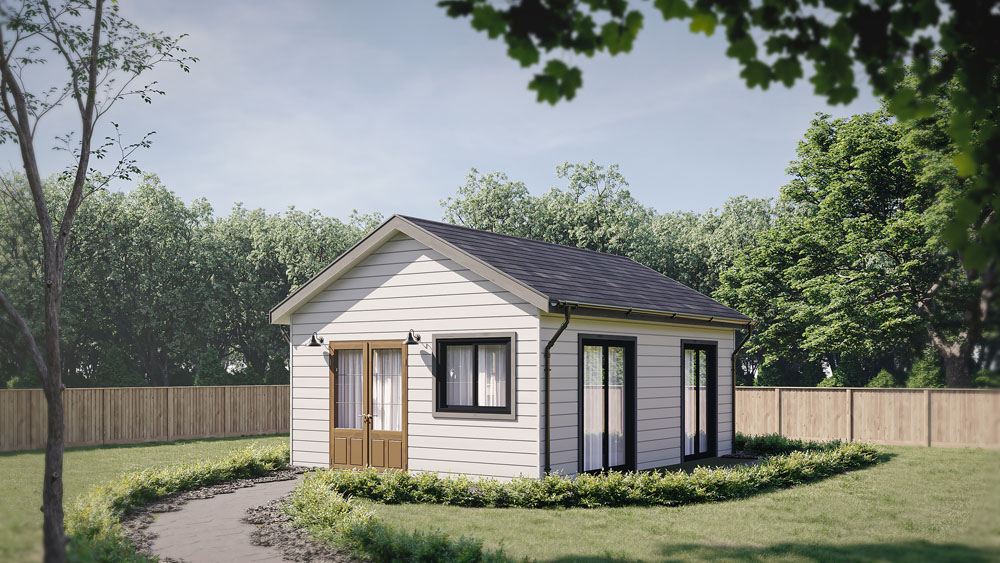
As the Austin metropolitan area grows, there’s been a push for increased housing options. ADUs play a big role in creating more housing options for residents.
Many homeowners are choosing to add ADUs to house elderly family members who need more care, create a landing pad for recent college grads, or add a reliable stream of rental income.
If you are interested in building an ADU, you’ll need to understand the codes and requirements for your specific location. To make it easy for you, we’re breaking down the permitting process, including the essential steps and regulations based on current City of Austin codes.
Do You Need a Permit for an ADU in Austin?
Yes, ADU construction requires a permit, unless it’s less than 200 square feet or does not include plumbing. Of course, a trade permit will still be necessary for HVAC or electrical, as needed. In Austin, ADUs are encouraged but still regulated to ensure safe and compliant living spaces and construction processes.
Most of the tiny homes we build include plumbing and are more than 200 square feet; therefore, we are well-versed with permitting. Your local building department is a great source of information — but as one of Austin’s premier tiny home builders, we’ve managed the permitting process countless times.
How to Check Zoning and Eligibility for ADUs in Austin, TX
Before you get started, you’ll want to confirm whether your property is eligible for an ADU. Austin has many single-family zones, the most common being: SF-1, SF-2, SF-3, and SF-4. Austin has updated its Land Development Code to allow for increased density, which may impact single-family zones in the future. This is good news for those who want to build ADUs, as the goal of increased density is likely to mean more flexibility to add a secondary dwelling.
Currently, only SF-1, SF-2, and SF-3 are eligible to build ADUs.
ADUs in Austin, Texas, and the HOME Initiative
The HOME Initiative is a series of amendments to Austin’s Land Development Code. The goal of these amendments was to provide more housing types and increase housing density, specifically in single-family zone areas.
The code changes include:
- Phase 1, allowing up to three housing units in single-family zones SF-1, SF-2, and SF-3, in addition to removing regulations on how many unrelated adults can live in a housing unit.
- Phase 2, allowing single units on smaller lots in single-family zones SF-1, SF-2, and SF-3. From the HOME website, “This land use allows for the development of one unit on lots of at least 1,800 square feet but less than 5,750 square feet, which is the standard residential minimum lot size.”
- Site Plan Lite Phase 2 and Infill, which creates new lots through subdivision and modifies drainage regulations.
What does this mean for you?
This means that ADU regulations have relaxed and become more inclusive. This is good news — ADU projects are being encouraged by the city of Austin. While the home amendments themselves can be a complex read (find full information here), the team at Austin Tiny Homes is happy to walk you through the particulars as they relate to our project.
Austin ADU Construction and Design Requirements
Austin, TX, has specific caps on size, height, and placement to ensure the ADU integrates well into the neighborhood.
Within the city of Austin, the following restrictions apply:
Size
ADU size is restricted in proportion to the lot. This is calculated with a floor-to-area ratio, also called a FAR. Austin’s FAR for one unit lots is .40, two unit lots is .55, and three unit lots is .65. If you have one unit on your lot, and plan to add an accessory dwelling unit, you would multiply your lot size by .55 to find out the maximum size of your ADU.
Height
This varies based on how many units will be on your lot. For two- or three-unit lots, you can go up to three stories.
Setbacks
Setbacks are dynamic based on what is being proposed. Lots that have two units must adhere to front, rear, and side setbacks. Front setbacks are fifteen feet, while rear and side setbacks are five feet. For corner lots, the streetside setback is 10 feet.
Structural Requirements
ADUs by definition must contain at least a full bathroom, dishwasher or sink outside of the bathroom, and a habitable space for living and sleeping.
Getting a Permit for an ADU in Austin, Texas
Austin’s permitting process has many steps that must be completed in the correct order. Here’s how you’ll get started.
First, verify your eligibility by confirming zoning, lot size, and any deed restrictions. It’s the applicant’s responsibility to make sure that specific HOA covenants do not prevent an ADU from being built as well.
Next, you’ll have to request a new address. The new unit requires a unique address or building number. This must be verified by Austin’s Address Management Services before submitting the permit application.
The permitting process is managed through a portal called Austin Build + Connect. You must have an account on the Austin Build + Connect (AB+C) Portal to submit documents, pay fees, and manage the application.
To actually apply for the permit, you will submit a Residential Plan Review application for a New Construction and Addition Building Permit, along with all required documentation.
Once the initial intake review confirms all documents are present, you will be notified to log in to your AB+C account and pay the invoiced plan review fees to start the official review.
After the plan review is approved, the permit and associated trade permits are generated. Registered contractors must pay for and activate the pending permits, and construction cannot begin until permits are active.
Can ADUs be Used as Rentals in Austin?
Yes, they can — but there are limitations and restrictions.
Long-term rentals, with lease terms longer than 30 consecutive days, are encouraged to help increase housing density and create more affordable housing options as the city grows. ADUs can be leased out to long-term tenants. As long as your ADU and lease contract adhere to all landlord-tenant laws, and your unit has a valid certificate of occupancy, you will have no trouble leasing it out!
Short-term rentals, on the other hand, are subject to more restrictions. This is to help manage housing demand and ensure properties that can be long-term residences don’t get used as vacation rentals. If your ADU was constructed (or permitted) after October 1, 2015, it may only be used as a short-term rental for a maximum of 30 days per calendar year. Any property used as a short-term rental must have a current short-term rental license from Austin.
Anyone choosing to use their ADU as a rental, long-term or short-term, must ensure that there are no HOA or deed restrictions that would prevent them from doing so.
Why Choose Austin Tiny Homes
Austin Tiny Homes offers white-glove service from your site visit to handing over your keys. As part of this experience, we manage the entire permitting process for you, ensuring no delays or headaches for you. All you have to do is choose a model, customize your design, and we’ll take it from there.
Permitting is a complex process — we know how to ensure it gets done right the first time. Our local experience and expertise mean we know the building codes inside and out, we are up to date on news and future changes, and we know what to expect for inspections and approvals.
If you want to work with a team that’s dedicated to making sure your ADU project in Austin runs smoothly, get in touch with Austin Tiny Homes today.