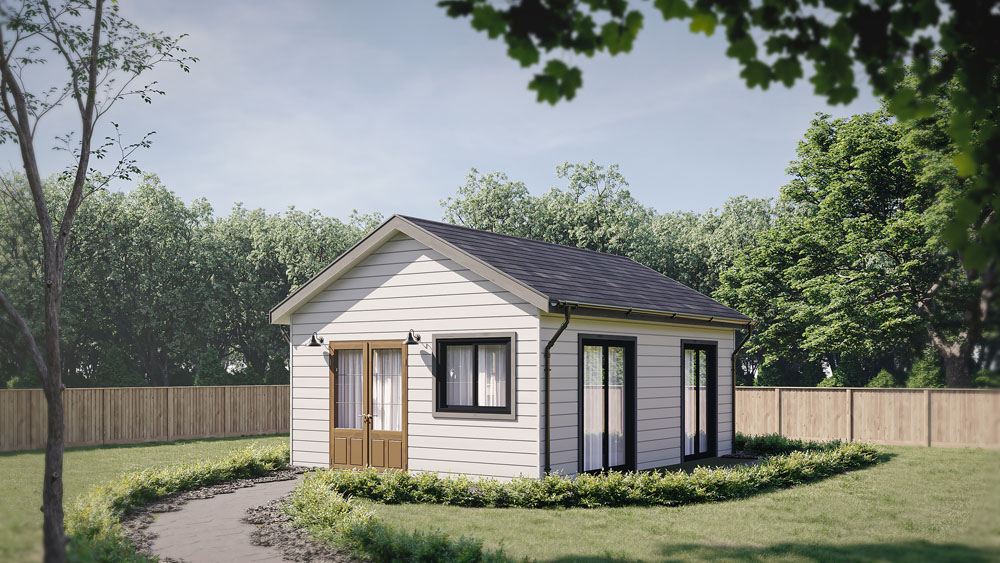
Thinking about adding an ADU in Austin, but wondering what it’ll do to your property taxes? You’re not alone. For a lot of homeowners, taxes are the first big question that comes up right after “Can I even build one?”.
Backyard tiny homes and ADUs sound great in theory, but it’s a good idea to understand the financial ripple effects before you fully commit. Let’s walk through how ADUs work in Austin and what you should realistically expect when it comes to property taxes, value, and long term benefits.
A Quick Intro To ADUs & Backyard Tiny Homes
An accessory dwelling unit, usually called an ADU, is a secondary living space built on the same lot as a primary home. In Austin, that might look like a backyard cottage, a converted garage, or a small addition attached to the main house. Some homeowners even create ADUs inside existing space, like a finished garage or a portion of the home with its own entrance.
ADUs are popular in Austin for a few big reasons. They add flexibility, help homeowners adapt to changing family needs, and can create long term rental opportunities in a city where housing demand keeps growing. Whether you call it a backyard tiny home, granny flat, or casita, the goal is the same. It is a fully functional living space with a kitchen, bathroom, and sleeping area that works independently from the main house.
Wondering what a complete ADU could look like? Check out our portfolio of completed tiny home projects, all right here in Austin.
Does Adding An ADU Increase Property Tax in Texas?
Short answer, yes, adding an ADU usually increases your property taxes in Texas. That said, it’s not quite as dramatic a change as many homeowners fear.
In Texas, property taxes are based on assessed value, which is handled at the county level. In Austin, that means the Travis County Appraisal District will be evaluating your property. When you build an ADU, you’re adding a new improvement to your property. The value of that improvement is added to your existing assessed value.
What typically doesn’t happen is a full reassessment of your entire property, just because you built an ADU. Your main home keeps its existing assessed value, and the ADU is added on top of it. They’ll blend these numbers to get your final value.
The increase also doesn’t usually show up right away. In many cases, the updated assessment appears in the next tax cycle, after the ADU is completed and receives its certificate of occupancy. Since every property and project is different, it is smart to plan for a higher tax bill: but don’t assume it will automatically be overwhelming.
If you plan to rent out the ADU long term or use it for family housing instead of moving or buying a larger home, many homeowners find the tradeoff makes sense.
Benefits of An ADU in Austin, TX
Even with a property tax increase, ADUs can be one of the most practical home investments in Austin. The benefits tend to go far beyond numbers on a tax statement.
In-Law Suites, Right In Your Backyard
Not every ADU is about rental income. For many Austin homeowners, the biggest benefit is flexibility for the family.
An ADU can be an ideal in-law suite for aging parents, a private space for adult children, or a comfortable setup for guests who visit often. It allows families to stay close without giving up privacy. Compared to moving or adding onto the main house, a detached or semi detached ADU can feel like the best of both worlds.
As life changes, that same space can later transition into a rental or home office, which makes it a long term solution instead of a one time fix.
Improved Property Value
While property taxes may go up, ADUs often increase overall property value as well. In Austin’s competitive housing market, homes with permitted, well designed ADUs tend to stand out.
Buyers see ADUs as flexible assets. Some see rental income potential, others see space for multigenerational living, and some simply like having extra square footage that feels separate from the main home. Even if you never rent the unit, the added functionality can make your property more appealing when it comes time to sell.
It is also worth noting that different types of ADUs can impact value differently. A detached backyard cottage often adds more value than a simple interior conversion, but it also comes with higher construction complexity. Choosing the right approach for your lot and goals is key.
Short-Term Rental Income Opportunities
A lot of homeowners ask whether they can use an ADU as a short-term rental in Austin. The answer is yes, but with very specific rules.
According to the City of Austin, an ADU can only be used as a short-term rental under certain conditions. If the ADU was constructed after October 1, 2015, it may not be used as a short term rental for more than 30 days in a calendar year. You’ll also need an approved short term rental license and a certificate of occupancy for the ADU, which is issued after all final inspections are passed.
Austin’s short-term rental regulations are currently fairly restrictive, so this is something you’ll want to confirm you’re okay with early in the design process. Lots of homeowners still find value in limited short term use – but others decide to focus on long term rentals instead, which often provide more stability and fewer regulatory hurdles.
Start Building Your Austin ADU Today
Adding an ADU to your home can be a game changer for your lifestyle. While property taxes do – unfortunately! – usually increase for your property, the added flexibility, potential income, and lifestyle benefits often outweigh the downside.
The best first step is understanding what your lot allows, how you want to use the space, and how local rules apply to your plans. Working with an Austin based ADU builder who understands zoning, permitting, and design can help you avoid surprises and make informed decisions from day one.
If you’re thinking about building an ADU in Austin and want clear guidance on taxes, rentals, and design options, now is a great time to start the conversation. Schedule a consultation with Austin Tiny Homes today.